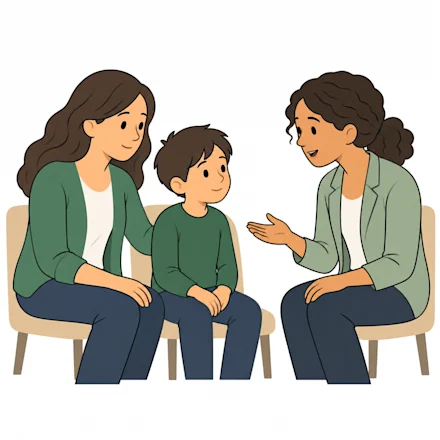
You may notice that your child seems persistently sad, frightened, irritable or withdrawn, or that ordinary parts of life have become much harder. Start by writing down what has changed, when it happens and how it affects sleep, eating, learning, relationships, play or daily care. You do not need to decide what the change means before asking for help.
A single upsetting event or difficult week does not by itself establish a mental health condition. Look for a pattern that lasts, worsens, appears in more than one setting or interferes with things your child needs or wants to do. Also note strengths, settled periods and what seems to help. This gives a professional a fuller picture than a label such as anxious, defiant or depressed.
Talk with your child
Choose a private, unhurried moment. Describe what you have observed without announcing a diagnosis or demanding an explanation. Younger children may answer through play, drawing or short choices. Older children may need time and more control over when to continue. Listen for their view, including problems you cannot see from home.
What you could say
I’ve noticed mornings have been much harder and you’ve stopped wanting to see friends. I care about how things feel for you. What have you noticed?
If your child says nothing is wrong, keep the door open and continue observing. Do not make disclosure the price of support. Ask directly about safety if they mention wanting to disappear, die or hurt themselves.
Arrange a first professional conversation
Contact your child’s pediatric or primary care clinician, or a qualified child mental health professional. School staff may contribute observations and supports, but a school meeting is not a substitute for health care when symptoms are significant. Bring a short timeline, relevant medical information, medicines, recent changes and notes from other caregivers or teachers when appropriate.
What you could say
We are not deciding what this is on our own. We’re going to talk with someone whose job is to understand what has been hard and what might help.
A thorough assessment may include separate conversations with the parent and child, developmental and medical history, school information and questions about family context. Ask what the clinician is considering, what additional information is needed and what you should do while waiting.
Know when to act urgently
Seek prompt professional help for marked or worsening changes, severe distress, inability to manage basic daily activities, substance use, unusual beliefs or experiences, or repeated talk about death or self-harm. Medical symptoms and medication effects can also change mood or behavior, which is another reason not to diagnose from observation alone.
What you could say
I’m glad you told me. I’m going to stay with you, and we’re getting help now.
If your child may act on suicidal or self-harm thoughts, has made an attempt, has taken something dangerous, or cannot be kept safe, stay with them and use emergency help now. In the United States, call or text 988; call 911 for a life-threatening emergency. Elsewhere, use your local crisis line or emergency service.
Review the next step
After the first contact, write down the plan, who will follow up and when. Progress may first look like better information, a completed assessment, safer routines or a child who can describe what is hard—not an immediate end to every symptom. If concern continues or the explanation does not fit what you see, ask for reassessment or a second opinion.