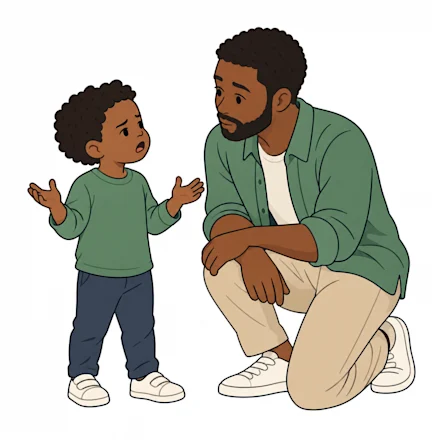
Shoes, teeth, clearing the table: a small request becomes a long exchange, and neither of you gets closer to finishing. For children ages 3–12, start by making one necessary action clear and checking whether it is manageable.
Get nearby, make sure your child can hear or see your cue, and give one concrete direction. You do not need to insist on eye contact. Avoid stacking several instructions together or asking a yes-or-no question when the task is not optional.
What you could say
Please put your plate beside the sink.
Point to the spot if useful, then allow time to respond. “Be helpful” leaves the child to work out what you mean. A direct request tells them what to do.
Look at where the exchange gets stuck
Before assuming defiance, consider whether your child understood, can do the task, is being interrupted without warning, or needs help beginning. Hunger, tiredness, discomfort, and competing demands can matter. A child may also understand and simply disagree.
Notice your part of the pattern. Do you make requests from another room, repeat them more loudly, add new tasks, or debate until the original request disappears? Pick one frequent situation to change rather than trying to improve every interaction at once.
For an older child, ask later which part is difficult. “What happens between finishing dinner and getting your things cleared?” is more informative than “Why do you always argue?”
Teach the action before the difficult moment
Choose one recurring request. For clearing blocks, put the tub within reach and decide that putting one block inside is the first success. Give a heads-up before play ends and use the same short direction each time. A picture cue or checklist can help.
At a calm time, turn that first step into a short practice game. Show it, give the cue, and let your child try with help if needed. Repeat a few successful turns on ordinary days. Practice delivering the cue and praise yourself so reminders do not become a lecture.
What you could say
You put the block in when I asked. That's a great start!
Say it immediately and warmly. A smile or offered high-five may suit your child; touch and eye contact are not required. Praise the same action during real cleanup, even if you prompted it or the child still complains. Once one block is usually easy, ask for a few, then gradually the manageable cleanup.
A simple chart can help some children: one point immediately with praise for the agreed step; for example, three points from practice and cleanup earn choosing a family game. Agree the exchange beforehand and honor it. Keep earned points after a later difficulty.
Offer help or timing choices only when both options are workable. Urgent safety instructions are different. If the child refuses, keep the direction brief, check the difficulty and help them start. Pausing the next floor activity until the walkway is clear can be proportionate; canceling a birthday is not. Food, sleep, comfort and essential care remain available.
End the debate without ending the conversation
Give a short explanation when it is useful, answer a genuine question, and avoid trying to win every point. A child can complete a task while still disliking it. You do not need an enthusiastic attitude as well.
When the same disagreement returns, make space to reconsider the arrangement outside the rushed moment.
What you could say
You think the jobs aren't shared fairly. Let's look at everyone's jobs after dinner tomorrow. Tonight, please put away your own materials.
Only promise that discussion if you will hold it. A later review may reveal that the expectation really does need changing.
Decide whether the plan is helping
For a week or two, record whether the chosen action followed the cue and how much help was needed. Check your practice and praise too. When success is reliable, build the next small step and gradually reduce the chart while continuing ordinary praise.
If arguments persist, change the task size, timing, cue, or support before increasing penalties. Seek help from your child's clinician or school when difficulties are widespread, intense, affecting learning or relationships, or accompanied by significant distress. If interactions become threatening or physical, prioritize safety and adult support over finishing the chore.